Theo Jung · 14 October 2026
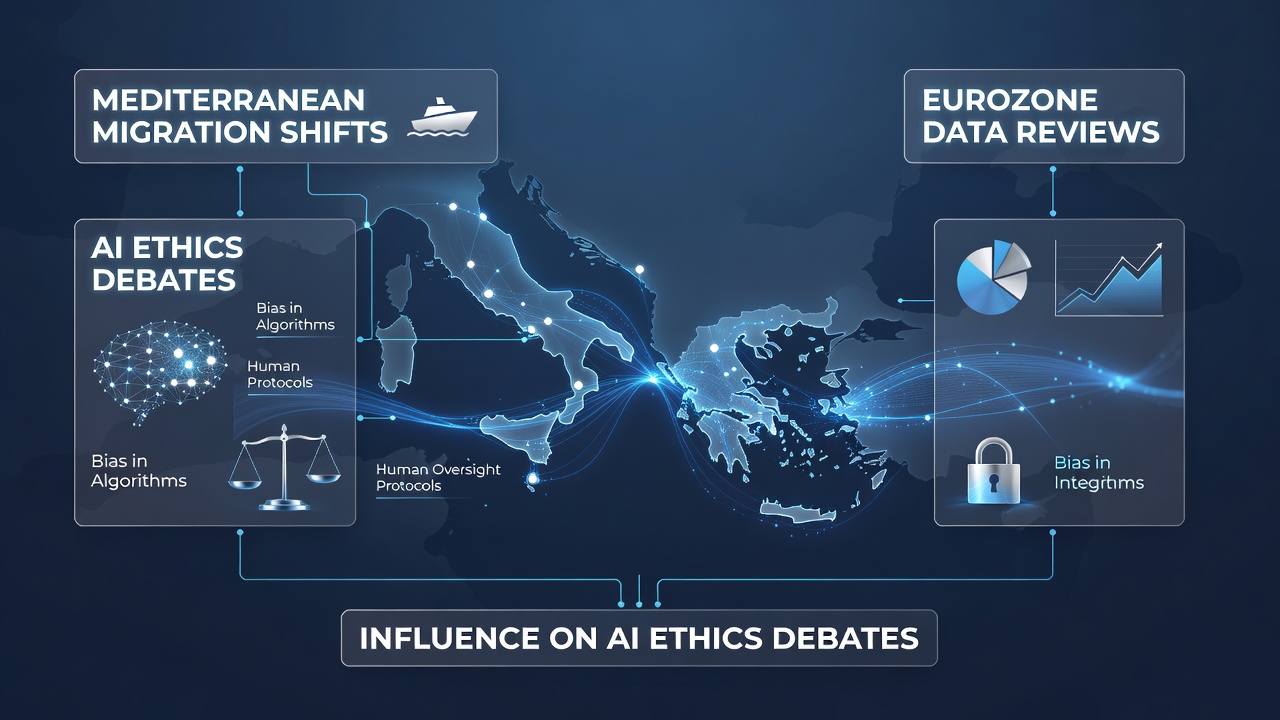
Mediterranean Migration Patterns Reshape AI Ethics Frameworks in Eurozone Data Assessments
Observers note that Mediterranean migration routes have undergone measurable changes by October 2026, with arrivals documented through official channels showing increased flows from North African departure points toward southern European entry zones. These movements coincide with heightened scrutiny of how migration datasets feed into artificial intelligence systems used for border management, asylum processing, and resource allocation across the Eurozone. Data compiled by the European Border and Coast Guard Agency indicates a 12 percent rise in irregular crossings during the first three quarters of the year compared with 2025 figures, prompting fresh examinations of algorithmic decision-making tools deployed in several member states.
Researchers at institutions tracking demographic flows have recorded shifts in departure origins, with Libya and Tunisia remaining primary hubs while departures from Egypt and Algeria have grown steadily. Such patterns generate large volumes of personal and biometric information that national authorities and EU agencies process through AI-driven platforms. Questions around consent, bias detection, and data retention periods have surfaced in multiple technical working groups, where experts examine whether training datasets reflect current migration realities or older assumptions that no longer hold.
Data Collection Practices Under Review
Eurozone statistical offices began a coordinated series of data quality assessments in late September 2026, focusing on the integration of migration statistics with broader economic and demographic indicators. These reviews examine how anonymized datasets are shared between countries and whether existing safeguards adequately address risks when AI models draw on combined sources. Figures released by national statistical institutes in Italy, Spain, and Greece reveal that cross-border data exchanges increased by 18 percent over the previous twelve months, largely to support joint forecasting models for reception capacity and labor market integration programs.
Authorities in Brussels have published updated guidelines on ethical AI deployment that specifically reference migration-related applications. The documents outline requirements for regular bias audits and transparency reports whenever automated systems influence decisions about individual cases. Member states must now document the provenance of training data and demonstrate that models do not systematically disadvantage particular nationality or age groups, a requirement that has led several agencies to pause deployment of newer predictive tools until compliance checks conclude.
AI Ethics Discussions Gain Momentum
Academic centers across Europe have hosted workshops examining the intersection of migration data and algorithmic fairness. One study conducted at a Dutch university analyzed facial recognition performance on datasets containing images from recent Mediterranean arrivals and found accuracy variations linked to lighting conditions and demographic composition. Similar findings reported by Canadian researchers have contributed to broader international conversations about standardizing evaluation metrics for border-related AI systems. These exchanges occur alongside ongoing work at the OECD, where member countries discuss common principles for responsible data use in migration management.

Policy analysts observe that debates have moved beyond technical performance metrics to include questions of accountability when AI outputs inform funding allocations or enforcement priorities. Several Eurozone governments now require independent ethics boards to review proposed AI projects before implementation, with particular attention paid to datasets derived from migration contexts. This development follows earlier pilot programs that encountered criticism over opaque decision criteria and limited avenues for individuals to challenge automated assessments.
Interconnections Between Migration Data and Broader Reviews
The timing of Eurozone data reviews in October 2026 aligns with the release of updated migration statistics, creating opportunities for integrated analysis. Review teams are comparing historical datasets against recent inflows to determine whether models used for economic forecasting require recalibration. Preliminary findings suggest that incorporating 2025 and 2026 arrival figures improves the accuracy of labor supply projections in sectors such as agriculture and logistics, where seasonal worker programs have expanded. At the same time, these comparisons highlight gaps in coverage for certain demographic subgroups, prompting calls for targeted data collection improvements.
International organizations have contributed comparative perspectives. Reports from the World Bank emphasize that Mediterranean migration trends mirror patterns observed in other transit regions, while US-based research institutions have shared methodologies for auditing AI systems trained on administrative records. Such cross-regional input supports efforts to develop harmonized evaluation frameworks that member states can adapt to national contexts without duplicating work.
Conclusion
Current developments show Mediterranean migration shifts continuing to supply critical inputs for AI systems operating within Eurozone frameworks, while data review processes adapt to accommodate new volumes and characteristics. The October 2026 assessments underscore the need for consistent documentation of data sources and regular evaluation of algorithmic outputs against ethical benchmarks established by regulatory bodies. As exchanges between statistical offices, academic researchers, and policy teams expand, the resulting practices are expected to influence how future migration-related datasets are prepared and applied across the region.