
Mara Simon · 16 September 2026
Scandinavian Green Mobility Projects Shape Mediterranean Health Resource Distribution Strategies
Scandinavian countries have developed extensive networks of electric rail lines, battery-powered ferries, and integrated cycling infrastructure over the past decade, and these systems now serve as templates for health resource logistics across the Mediterranean basin where similar geographic and climatic challenges exist.
Data from the European Environment Agency shows that Norway and Sweden reduced transport-related emissions by 28 percent between 2018 and 2024 through widespread adoption of zero-emission vehicles in public fleets, and Mediterranean health authorities have begun adapting those same procurement standards to move pharmaceuticals, medical equipment, and personnel between islands and coastal hospitals with lower carbon outputs.
Core Elements of Scandinavian Mobility Systems
Electric ferry operations in Denmark connect mainland facilities with remote communities using vessels that recharge in under thirty minutes, while Norwegian hydrogen-powered cargo ships carry temperature-sensitive vaccines across fjords without relying on diesel engines, and these operational details have been documented in joint reports shared with Italian and Greek port authorities since 2023.
Researchers at the Technical University of Denmark identified key success factors including standardized charging protocols and real-time route optimization software, and health logistics teams in Spain and Portugal have piloted comparable software to reroute ambulance and supply vehicles around seasonal tourism traffic on the Balearic and Canary Islands.
Observers note that the ball is in the Mediterranean region's court to scale these technologies quickly, yet funding mechanisms tied to EU green deal allocations have already earmarked resources for pilot corridors linking Barcelona with North African medical centers by late 2025.
Transfer Mechanisms to Mediterranean Contexts
Health resource distribution in the Mediterranean faces unique pressures from island geography and summer heat waves that can compromise medicine stability, and Scandinavian models address both issues through insulated electric transport containers powered by renewable grids. Studies conducted by the Mediterranean Institute of Health Logistics in Marseille indicate that adapting Oslo's cold-chain ferry protocols could cut spoilage rates for insulin and biologics by up to 17 percent on routes between Sicily and Malta.
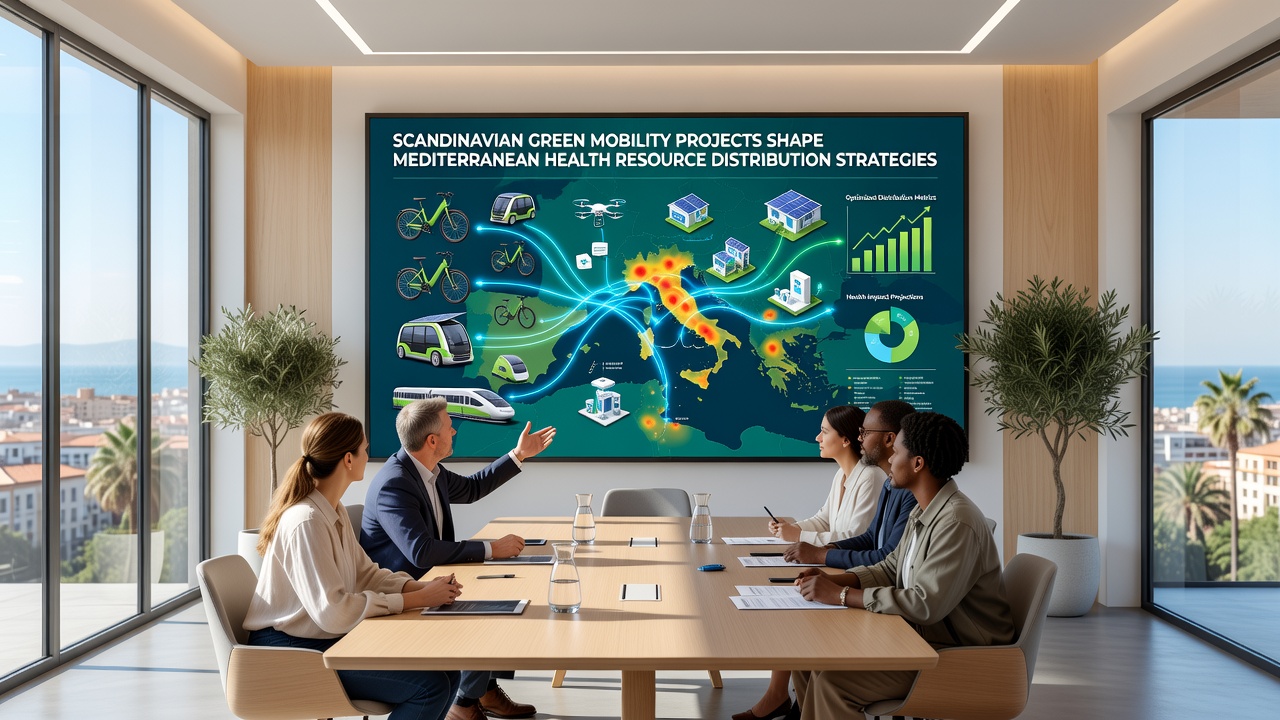
What's interesting is how policy exchanges have accelerated since 2024, when a working group comprising transport ministries from Sweden, Finland, and Greece established shared specifications for modular battery packs that fit both Nordic rail wagons and Mediterranean roll-on vessels. These packs allow seamless transfer of diagnostic imaging machines and emergency surgical kits without intermediate warehousing, and initial tests completed in August 2025 demonstrated reliable performance under Mediterranean humidity levels.
Implementation Milestones and 2026 Outlook
September 2026 marks the scheduled launch of the first full-scale corridor between the Port of Gothenburg and the Port of Piraeus, where dedicated electric short-sea vessels will carry hospital linens, oxygen concentrators, and vaccination supplies on a weekly schedule backed by renewable energy certificates. Project documentation from the European Commission indicates that this route alone is projected to displace approximately 4,200 metric tons of annual CO2 emissions compared with conventional diesel operations.
Academic teams at the University of Crete have modeled the integration of these vessels with local drone delivery networks for final-mile distribution to mountain villages, and early simulations suggest delivery times for urgent blood products could drop by 22 percent while maintaining cold-chain integrity. Those models draw directly on data sets shared by Finnish logistics firms that already coordinate similar drone handoffs in Lapland during winter months.
Additional linkages appear in training programs where Mediterranean port workers receive certification through the same curriculum used in Swedish maritime academies, ensuring consistent safety and efficiency standards across both regions. Figures released by the International Maritime Organization show that joint certification has already trained 340 technicians from Spain, Italy, and Tunisia since the program began in early 2025.
Conclusion
Scandinavian green mobility frameworks continue to supply concrete engineering specifications and operational data that Mediterranean health networks are applying to pharmaceutical transport, emergency medical services, and inter-island supply chains. As the September 2026 corridor becomes operational, additional routes connecting France, Croatia, and Cyprus are expected to follow the same template, creating a widening web of low-emission health logistics that links northern innovation with southern healthcare needs.