Theo Jung · 25 November 2026
Southern European Heritage Conservation Initiatives Fuel Northern Urban Eco-Transport Pilots
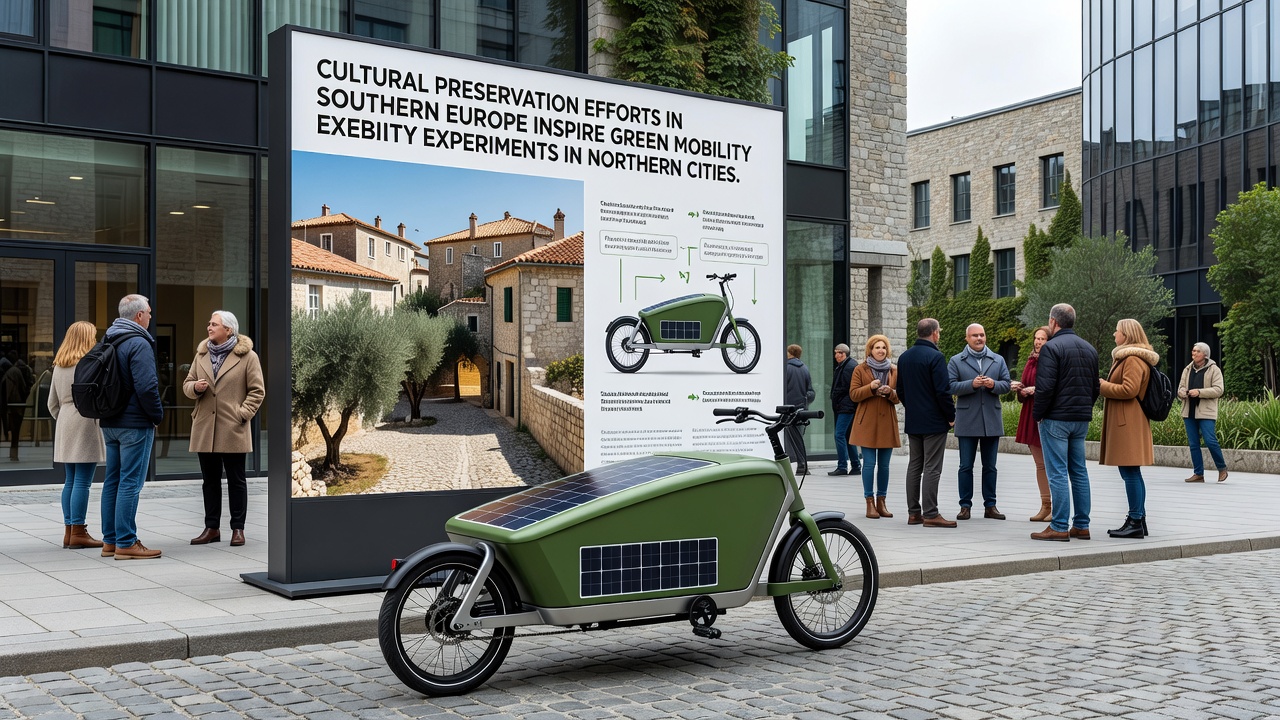
Cultural preservation projects across Italy, Spain and Greece have long emphasized pedestrian priority zones around ancient sites and historic districts, and these approaches now feed directly into green mobility experiments underway in cities such as Stockholm, Oslo and Helsinki. Researchers tracking urban policy transfers note that measures originally designed to protect stone monuments and narrow medieval streets are being adapted for emission reduction targets in colder climates where winter cycling infrastructure and electric public transport dominate planning discussions.
Heritage Protection Models From the Mediterranean
Italian authorities in Florence and Rome expanded car-free buffers around UNESCO-listed centers during the early 2020s, cutting vehicle entries by measured percentages according to municipal transport reports, while similar restrictions in Seville and Athens incorporated timed delivery windows and resident-only permits. These frameworks rely on physical barriers, license-plate monitoring and integration with local public transit schedules, creating templates that preserve building facades and reduce vibration damage simultaneously. Data compiled by the European Commission on cultural heritage shows that such zones correlate with lower particulate levels near protected structures, prompting planners elsewhere to examine the same logic for modern sustainability goals.
Adaptation in Northern City Experiments
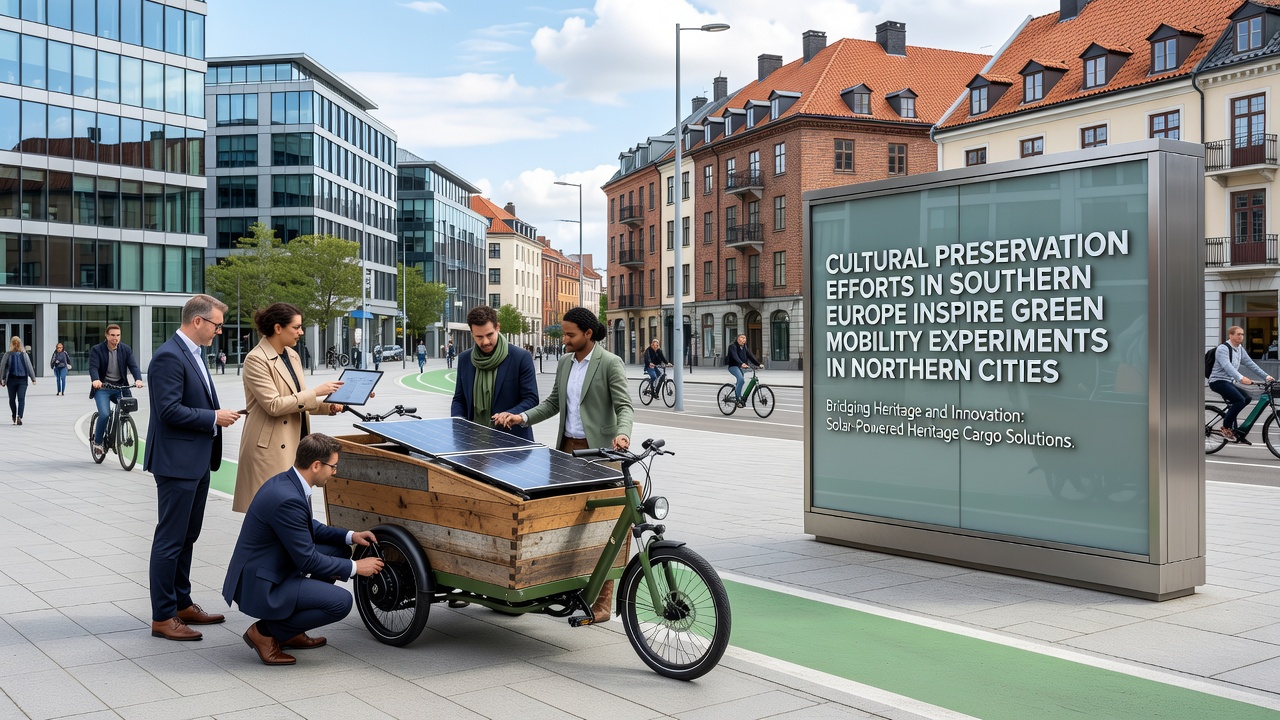
Stockholm introduced expanded low-emission corridors around its old town in 2025, drawing explicit reference to Italian pedestrian precedents, and Oslo followed by testing cargo-bike priority lanes combined with heritage-adjacent park-and-ride facilities. Helsinki officials launched a pilot in November 2026 that pairs electric ferry connections with protected wooden-building districts, using sensor networks first trialed in Greek island ports to manage flows without asphalt expansion. Observers note that these northern adaptations retain the core principle of restricting private combustion vehicles near culturally significant areas, yet they layer on cold-weather technologies such as heated bike paths and inductive charging stations absent from southern originals.
Policy Transfer Mechanisms and Data Trends
Cross-regional workshops organized through EU urban mobility programs have facilitated direct exchanges between southern heritage offices and northern transport departments since 2024, with joint studies documenting how pedestrianization metrics translate across latitude differences. Figures released by the OECD in late 2025 indicated that cities adopting hybrid heritage-mobility plans recorded average drops in downtown traffic volumes of 18 to 27 percent within the first year of implementation. Those who've studied this know the transfer often occurs through shared software platforms for permit management and real-time air-quality dashboards originally developed for monument protection and later repurposed for emission tracking. And while geography dictates material choices, the underlying regulatory structure of time-based access and multi-modal hubs remains consistent.
Case Examples of Integrated Projects
One documented instance involves Barcelona's superblock model, which limited through-traffic to safeguard Gothic Quarter integrity, now mirrored in a Malmö district redesign that combines cultural signage with rapid-charging hubs for e-buses. Another case from Lisbon's tram-priority historic routes informed Copenhagen's 2026 trial of dedicated lanes serving both tourists and commuters around Rosenborg Castle grounds. Research indicates these projects succeed when local stakeholders, including preservation boards and mobility agencies, co-author implementation guidelines rather than importing plans wholesale. Evidence suggests measurable co-benefits emerge for both heritage conservation and air-quality targets when the two objectives share enforcement mechanisms.
Conclusion
Patterns emerging from southern preservation work continue to supply tested regulatory and design elements for northern green mobility pilots, with ongoing data collection through 2026 and beyond expected to clarify long-term outcomes across varied climates. External evaluations from bodies such as the European Commission Directorate-General for Mobility and Transport and the Australian Department of Infrastructure provide comparative benchmarks that assist cities refining these hybrid strategies. The exchange demonstrates how established conservation practices can underpin broader environmental experiments without requiring entirely new policy architectures.